Hearing Aid Selection & Fitting in Chambersburg, PA
Buying a hearing aid is the easy part. Making it sound right in your ears, in your house, at your dinner table — that's the work, and it's what a fitting actually is.
Two people can wear the same device and have completely different experiences with it. Ear canals differ in size and shape, and those differences change what a hearing aid actually delivers to the eardrum. A proper fitting measures what's happening inside your ear rather than trusting the manufacturer's default settings to be close enough.
Why we use real-ear measurement
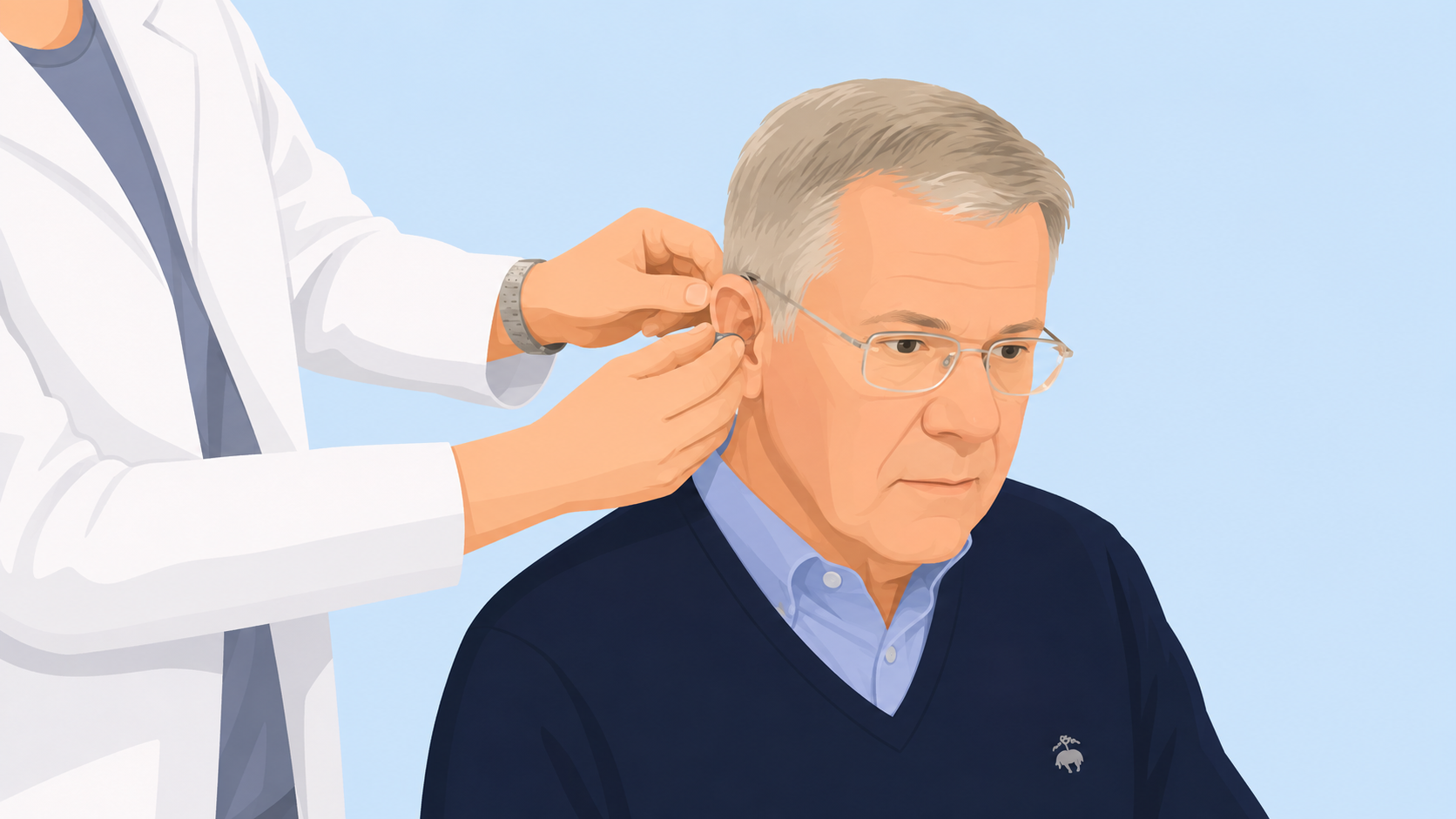
Real-ear measurement places a thin probe microphone in your ear canal alongside the hearing aid, then measures the sound level actually reaching your eardrum while the device is running. We compare that against the prescription your hearing test calls for, and adjust until the two match.
Without it, a fitting relies on the manufacturer's first-fit software and on asking you how it sounds — and a brand-new hearing aid sounds strange to everyone at first, which makes that a poor instrument for judging accuracy. Real-ear measurement is the difference between a device that's turned on and a device that's verified.
It's the recognized best practice for fitting hearing aids, and not every provider performs it. We do it on every fitting, and we'll show you the screen.
What goes into choosing a device
There is no single best hearing aid. There's the one that fits your hearing loss, your hands, your routine and your budget — and those four don't always point the same direction.
The shape and degree of your hearing loss rules some devices in and others out before style or price enters the conversation. This is why fittings follow a comprehensive hearing test, never the other way around.
Someone who mostly needs help in quiet one-on-one conversation has different requirements from someone in meetings, restaurants and church halls. Directional microphones and noise processing matter more in the second case.
The smallest device is not the best device if changing a battery or seating it correctly is a daily frustration. Rechargeable models and larger styles solve a real problem for a lot of people.
Streaming phone calls, television, or hearing better on video calls are worth weighing honestly — useful for some people, an unused feature paid for by others.
We're independently owned, so we fit devices from multiple manufacturers and have no quota to meet with any of them. If a less expensive device is the right answer, that's the recommendation you'll get.
What the fitting process looks like
A fitting isn't a single appointment. It's a short series, because the adjustments that matter most come from how the devices perform in your actual week.
Selection
We review your audiogram together and narrow the options against how and where you need to hear, then talk through cost and what's covered.
Fitting & verification
Devices are physically fitted, programmed to your prescription, then verified with real-ear measurement and adjusted until they hit target.
Learning to wear them
Insertion, cleaning, charging, and what to expect in the first two weeks — including which strange-sounding things are normal and which aren't.
Follow-up adjustment
You come back and tell us where they fell short. Real rooms surface things a clinic never will, and that's what fine-tuning is for.
Common questions
How long does a hearing aid fitting take?
Plan on about an hour for the fitting appointment itself, including real-ear verification and time to learn how to handle the devices. Follow-up visits are shorter.
How long does it take to get used to hearing aids?
Most people need a few weeks. Sounds you haven't heard clearly in years — footsteps, paper rustling, your own voice — come back all at once and feel overwhelming before your brain re-learns to filter them. Wearing the devices consistently through that period matters more than anything else you can do.
What is real-ear measurement and do I need it?
It measures the sound your hearing aid actually delivers to your eardrum and compares it to what your hearing loss prescribes. Because ear canals vary, manufacturer default settings frequently miss that target. It's the recognized best practice for verifying a fitting, and we perform it on every fitting we do.
Can I try hearing aids before committing?
Yes. Pennsylvania law requires every hearing aid sold in the
Commonwealth to come with a 30-day money-back guarantee, counted from the day your
devices are delivered. If they aren't working for you, return them in the same
condition within that window and you're entitled to a refund of the purchase price
as itemized on your receipt. We'll walk through the written guarantee with you
before you commit to anything.
One piece of advice: give them at least three or four weeks before deciding. New
hearing aids sound strange to almost everyone at first, and most of that fades as
your brain adapts. Come in for an adjustment before you conclude they aren't
working.
What does a hearing aid fitting cost?
No. There's no separate charge for the fitting appointment or for the follow-up adjustments that come after it. Getting your devices measured, verified and dialed in is part of buying them from us, not an add-on line on an invoice.
Can you service hearing aids I bought somewhere else?
Yes. We service hearing aids purchased somewhere else — another provider, a big-box retailer, or online. Cleaning, adjustment, and repair are all things we can help with, and you don't have to become a device customer to get them looked at. Bring them in and we'll tell you honestly what they need.
Ready to be fitted properly
Fittings begin with a comprehensive hearing test. Call us or request an appointment, and Christine will confirm your benefits beforehand.
Request an Appointment (717) 504-8459